
Thermal Energy Storage (TES) is the defining advantage of MicroCSP over conventional solar panels. Rather than storing raw electricity in costly chemical batteries, KSP captures heat directly in insulated heat-transfer fluid tanks—keeping turbines running smoothly when clouds pass overhead and after sunset.
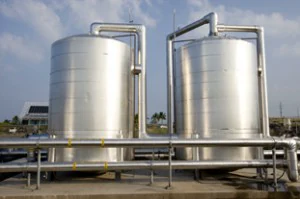
Proof from Real Holaniku Telemetry (September 2012)
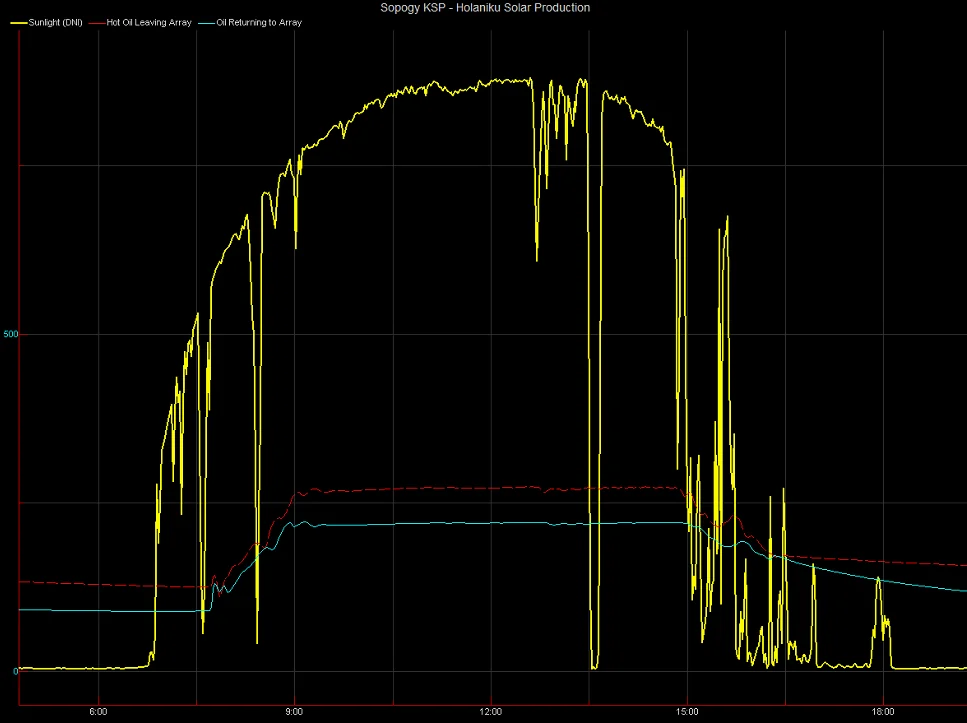
Actual field telemetry recorded at Holaniku demonstrates how the thermal loop maintains remarkably flat output temperatures despite abrupt midday cloud cover drops:
Interactive Telemetry Preview
How 2-Hour Thermal Storage Smooths Island Grid Volatility
Switch operating conditions to see how MicroCSP thermal storage buffers passing coastal clouds and continues generating power into Hawaii's evening peak.
Solar DNI
940 W/m² Peak Sun
Thermal Tank
Charging Buffer (100%)
Grid Output
500 kWe Steady Dispatch
Grid Stability
Peak steam generation while storing reserve thermal energy